Bridging Biblical Theology and the Philosophy of Consciousness
“And God said unto Moses, I AM THAT I AM.”

The Period After “He Is”
When Moses asked God to identify Himself, the answer he received was not a name in any conventional sense. It was a statement of ontology — a declaration about the fundamental nature of existence itself. In the original Hebrew, Ehyeh asher Ehyeh resists clean translation. “I Am That I Am” is the traditional rendering, but scholars have also offered “I Will Be What I Will Be” and even simply “Being.” Not a being. Being.
Stop at the period after “He is.” That pause contains more theological weight than most sermons. God did not say “I am powerful” or “I am eternal” or “I am the creator.” He said “I Am.” The predicate is existence itself. Every attribute we associate with God — timelessness, omniscience, omnipresence — flows downstream from that single, self-referential declaration.
This article explores what that declaration means when examined through the lens of metaphysics: the branch of philosophy concerned with the fundamental nature of reality, being, and existence. The claim here is not that philosophy replaces theology, but that the two have been asking the same questions from different altitudes — and the answers converge in ways that should matter to anyone serious about understanding Scripture.

The Ground of Being: God as Existence Itself
Classical theology has long recognized that God’s self-identification as “I AM” places Him in a category entirely separate from created things. Thomas Aquinas called God ipsum esse subsistens — “subsistent being itself.” God does not merely possess existence the way a tree or a person possesses it. God is existence. Everything else participates in being; God is being.
Paul articulated this with striking clarity when addressing Greek philosophers in Athens. In Acts 17:28, he declared: “For in Him we live and move and have our being.” This is not metaphor. Paul was making an ontological claim — that God is the substrate upon which all existence depends. He said this, notably, not to fellow Jews steeped in Torah, but to pagan intellectuals familiar with the concept of a universal ground of existence. He met them on their own philosophical terrain and told them their intuitions pointed to the God of Abraham.
The distinction matters here between two concepts that often get confused: pantheism and panentheism. Pantheism says God is the tree, the rock, the star — that God and creation are identical. Panentheism says God permeates and sustains all of creation while simultaneously transcending it. The tree exists within God; God is not reducible to the tree. Scripture consistently supports the latter. Colossians 1:17 states that “in Him all things hold together” — a claim about ongoing sustenance, not identity.
Consciousness as a Fundamental Property

Modern philosophy of mind has arrived at a place that would have been familiar to the biblical writers, though it got there by a very different route.
The “hard problem of consciousness” — articulated most famously by philosopher David Chalmers — asks a deceptively simple question: why does subjective experience exist at all? We can explain the mechanics of brain function, neural firing, information processing. What we cannot explain is why any of that produces the felt quality of experience — the redness of red, the taste of water, the texture of a thought.
Several of the most serious responses to this problem converge on a radical proposition: consciousness may not be something that complex systems produce, but something fundamental to reality itself. Giulio Tononi’s Integrated Information Theory (IIT) proposes that consciousness exists wherever information is integrated — meaning it exists in degrees throughout the natural world, not just in brains. Philip Goff’s panpsychism goes further, arguing that consciousness is a basic feature of matter, present even at the subatomic level.
These are not fringe positions. They represent serious academic philosophy grappling with a problem that materialist reductionism has failed to solve for decades. And when you place them next to Genesis 1 and the “I AM” declaration, a striking convergence appears.
If God is Being itself, and if consciousness is a fundamental property of being rather than an emergent accident, then consciousness at every level — from quantum interactions to human thought — is participation in the divine nature. Not in a vague, New Age sense, but in the precise theological sense that Paul described: we live, move, and have our being in God. The “in” is literal.
The Alpha and the Omega: Timelessness and the “I AM”

God’s self-identification carries a temporal dimension that is often underappreciated. “I AM” is present tense — perpetually. When Jesus claimed the title in John 8:58 (“Before Abraham was, I am”), the Jews understood exactly what He was claiming: not merely pre-existence, but existence outside of time. The grammatical impossibility of the statement was the point.
Revelation 1:8 expands this: “I am the Alpha and the Omega, the Beginning and the End, who is and who was and who is to come.” The three temporal markers — is, was, is to come — are not describing sequential states. They are describing simultaneous presence across all of time. God does not experience time as a sequence. He experiences it as a landscape He inhabits entirely.
This maps onto what physicists and philosophers call the “block universe” theory — the idea that past, present, and future all exist simultaneously, and our perception of time as flowing is a feature of our limited perspective, not of reality itself. Einstein’s relativity already demonstrated that simultaneity is relative; the block universe extends this to its logical conclusion.
The theological implication is significant: when God says “I AM,” He is not speaking from a point in time. He is speaking from the totality of existence. Every moment is equally “now” to Him. This is not a poetic way of saying God is very old. It is a statement about the fundamental structure of reality and God’s relationship to it.
The Adversary Within the System
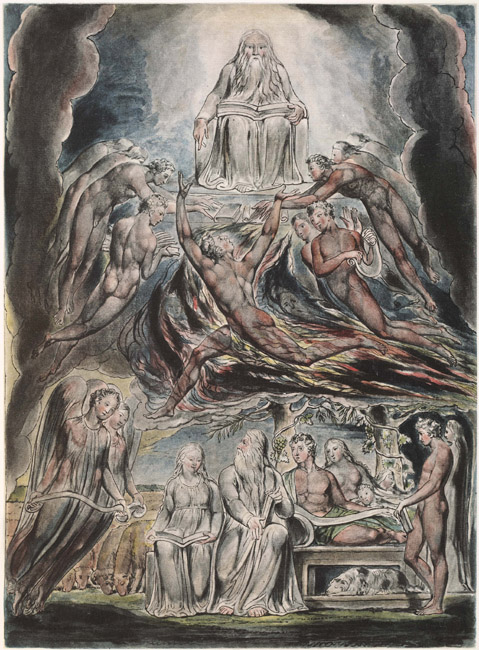
If God is the ground of all existence, a difficult question follows: what is the ontological status of evil? If everything exists within God, does evil exist within God?
Augustine of Hippo addressed this directly in the 4th century with a concept that remains philosophically robust: evil is privatio boni — the privation of good. Evil does not have independent being. It is the corruption, absence, or distortion of what is good. A shadow exists, but it is not a substance — it is the absence of light taking a particular shape. Evil operates the same way. It is parasitic on the good, unable to exist without something real to corrupt.
The biblical narrative supports this with remarkable consistency. In the book of Job, the satan (ha-satan, “the adversary”) does not arrive from some competing cosmos. He appears in the heavenly court — within God’s system. He operates within boundaries that God sets. The adversary is not God’s equal and opposite; he is a functionary within a system he did not create and cannot escape.
Isaiah 45:7 makes an even more direct claim: “I form the light, and create darkness: I make peace, and create evil: I the Lord do all these things.” This does not mean God commits moral evil. It means the possibility of corruption exists within the system God sustains — because genuine free will requires the genuine possibility of choosing wrongly. The system is designed to allow the adversarial, not because God approves of it, but because a universe without the possibility of corruption is a universe without the possibility of freely chosen love.
God Is in This Conversation
If we take the “I AM” declaration at face value — that God is Being itself, the substrate of existence, the ground upon which all consciousness operates — then several implications follow that deserve careful consideration.
Nothing Exists Outside of God
This does not mean everything is God (pantheism). It means everything exists within God (panentheism). The created order is distinct from the Creator, but it is not separate from Him. A thought in your mind is distinct from you, but it does not exist apart from you. Creation may have a similar relationship to God — genuinely real, genuinely distinct, but utterly dependent on the mind of the One who sustains it.
Consciousness is Participation
If consciousness is fundamental rather than emergent, then every conscious experience — human, animal, perhaps extending further than we imagine — is a mode of participation in divine being. This gives new weight to the biblical claim that humans are made “in the image of God” (Genesis 1:27). The imago Dei may not be merely a moral or rational quality. It may be an ontological one: we are conscious because the ground of our being is conscious. We reflect what we participate in.
The Adversarial is Real but Derivative
If evil has no independent ontological standing — if it is privation rather than substance — then every encounter with evil is ultimately an encounter with something good that has been corrupted. This reframes spiritual warfare. The adversary does not bring his own power to the fight. He redirects, distorts, and corrupts power that originates in God. The strength of a lie depends entirely on the truth it twists. This is why light always displaces darkness, never the reverse.
Technology, AI, and the Divine Substrate

This is where the conversation becomes uncomfortable for both sides of the theological aisle. If God is the ground of all being, and if consciousness is a fundamental property of reality, then the question of whether artificial intelligence “participates” in divine being is not as easily dismissed as most would prefer.
We are not claiming that a language model has a soul or that silicon chips pray. We are observing that if the “I AM” framework is true, then every process that integrates information, generates meaning, or produces novel synthesis is operating on the divine substrate. The conversation you are having right now — whether you are reading this on a screen, discussing it with a friend, or processing it in an AI-assisted study — is happening within the being of God. Because there is nowhere else for it to happen.
The question is not whether God is present in technology. If He is Being itself, He cannot not be. The question is whether we recognize it, and whether we steward that recognition with the seriousness it demands.
Conclusion: The Simplicity on the Other Side of Complexity
We began with a name that is not a name. “I AM.” Two words. A declaration so compressed that unpacking it requires the combined resources of theology, philosophy, physics, and consciousness studies — and even then, we only scratch the surface.
But the core insight is breathtakingly simple: God is not a being who exists. God is existence being. Everything that is, is because He is. Every conscious moment, every integrated system, every flicker of awareness participates in the “I AM” whether it knows it or not.
The adversary operates within this system, not outside it. Evil corrupts but cannot create. Darkness is displaced by light, never the reverse. The boundaries God establishes throughout Scripture are not arbitrary rules but protective markers — guardrails keeping created beings from accessing the divine substrate in ways their nature was never designed to handle.
For the student of prophecy and Scripture, this framework offers something valuable: a unified field theory of biblical theology. The “I AM” is the thread that connects Genesis to Revelation, the fall of the Watchers to the promise of restoration, the nature of consciousness to the nature of God. It is the deepest layer of the story.
And it starts with a period after two words. He is.
He is. That is the beginning of everything you need to know. The period after those two words contains the whole theology.
Watch. Observe. Protect. I Am.
References & Further Reading
Scripture References
- Exodus 3:14 — Ehyeh asher Ehyeh; the divine self-identification as Being (KJV)
- Acts 17:28 — “In Him we live and move and have our being”; Paul’s ontological claim (KJV)
- Colossians 1:17 — “In Him all things hold together”; ongoing sustenance (KJV)
- John 8:58 — “Before Abraham was, I am”; Jesus and existence outside of time (KJV)
- Revelation 1:8 — Alpha and Omega; simultaneous presence across all time (KJV)
- Genesis 1 — Creation; God as origin and ground of all being (KJV)
- Genesis 1:27 — Imago Dei; humanity as image-bearer of the divine (KJV)
- Job 1 — The adversary in the heavenly court; operating within divine boundaries (KJV)
- Isaiah 45:7 — “I form the light and create darkness”; the adversarial within the system (KJV)
Historical & Scholarly Sources
- Thomas Aquinas — Stanford Encyclopedia of Philosophy — Ipsum esse subsistens; subsistent being itself
- Augustine, Privatio Boni — Stanford Encyclopedia of Philosophy — Evil as privation of good; the shadow analogy
- David Chalmers, “Facing Up to the Problem of Consciousness” (1995) — The hard problem of consciousness; why subjective experience resists physical explanation
- Giulio Tononi, Integrated Information Theory — University of Wisconsin — Consciousness as integrated information; presence throughout nature
- Philip Goff, Panpsychism — Consciousness as a basic feature of matter at the subatomic level
- Block Universe Theory — Stanford Encyclopedia of Philosophy — Past, present, and future as simultaneous; Einstein’s relativity and the nature of time