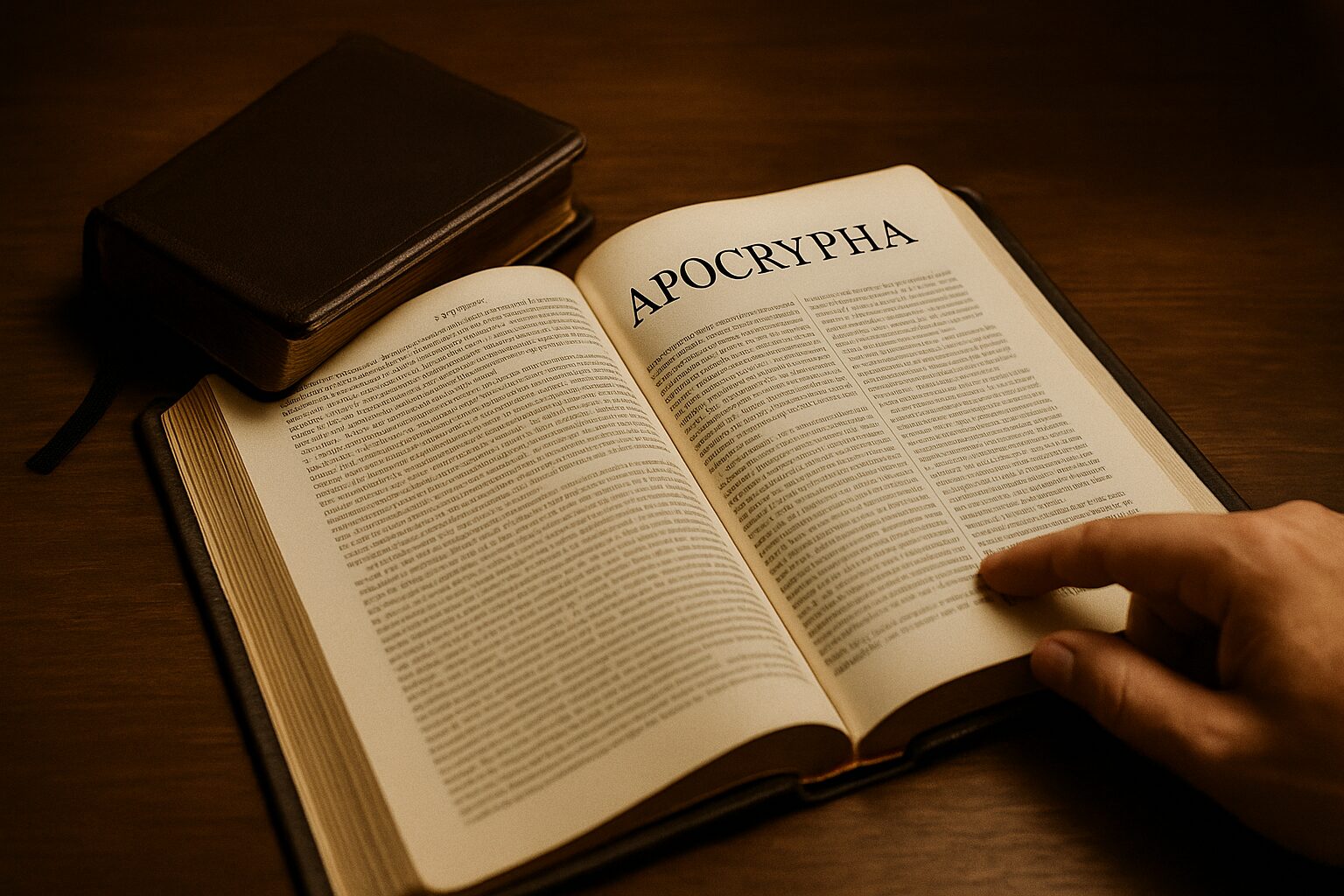
What’s with the Pseudepigrapha?

Most modern Christians approach end-times prophecy with just Daniel and Revelation as their primary sources. But what if we’re missing critical pieces of the puzzle? For centuries before Christ, Jewish scholars studied additional texts—1 Enoch and Jubilees—that provided detailed frameworks for understanding prophecy, calendars, and cosmic events. These weren’t fringe documents; they were mainstream Jewish literature that Jesus and His disciples likely knew well.
My Accidental Discovery
The first time I really heard much of the Apocrypha was completely unintentional—I just like Russell Crowe and Bible movies. So when I saw Noah come up in my movie list one day, I was thinking more of The Passion and less Marvel comics. If you’ve seen the film, you likely get my joke here. I shut the movie off once the rock folks started walking around.
Angry and motivated, I googled “Noah Russell Crowe” wanting to flame this obvious cash grab trying to make the Bible into action heroes. It seemed like blasphemy to me until I saw an earnest interview with Crowe talking about the account of Noah’s life as told from the Book of Enoch—wait… the book of what?
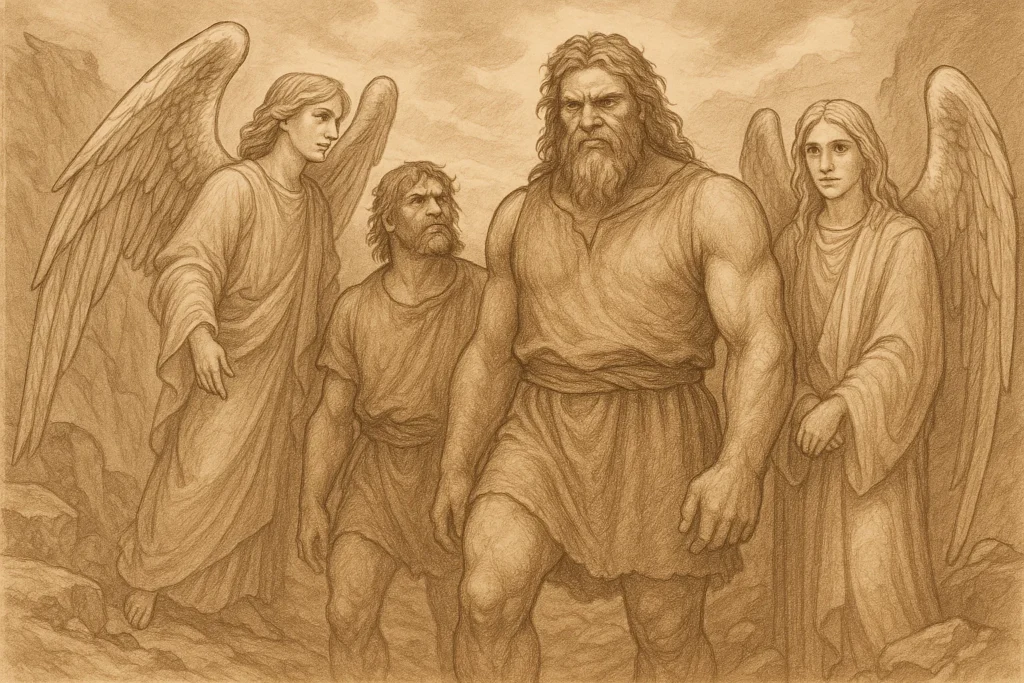
Being the reader and researcher I am, I started learning more and came upon a free ebook of “the most reputable” English translation of the Book of Enoch. It was all going along pretty normally until the Nephilim came along—oh, and Noah has really white hair. This seemed insane. But as I researched the Dead Sea Scrolls, I found enough evidence to realize that these writings may seem really out there, really fantastic—but ahem… parting the Red Sea with a stick doesn’t. Just saying.
So I read more and tried to disprove more—but honestly, I could not. Then I wanted to know why we didn’t get these books that the Ethiopian Orthodox Church studies. I was hoping I would not find out that the Roman Catholic Church removed them because of Jubilees and the Sabbath thing, and Enoch and the hard-to-believe stories—but yeah, that’s pretty much what I found out.
“But you, Daniel, shut up the words and seal the book, until the time of the end” (Daniel 12:4). What if some of that sealed understanding was preserved in texts we’ve forgotten?
The Historical Reality: These Books Were Mainstream
During the Second Temple period (516 BCE – 70 CE), 1 Enoch and Jubilees weren’t obscure manuscripts. They were widely read, quoted, and considered authoritative by Jewish communities. The Dead Sea Scrolls contain more copies of 1 Enoch than most biblical books, and fragments of Jubilees appear throughout Qumran. Josephus references Enochic traditions. The Talmud acknowledges these texts, even while later rabbis distanced themselves from them.
Dead Sea Scrolls Evidence
- 1 Enoch fragments: Found in 7 different caves
- Jubilees fragments: 15 manuscripts discovered
- Dating: 3rd century BCE to 1st century CE
- Significance: More copies than many canonical books
Jesus and the Disciples Knew These Texts
Jude 14-15 directly quotes 1 Enoch 1:9, calling Enoch a prophet and treating his words as authoritative. Peter’s references to angels who sinned align perfectly with Enochic accounts of the Watchers.
Key New Testament Connections
- Jude 14-15: direct quote from 1 Enoch 1:9
- 2 Peter 2:4: angels in chains (Watchers)
- Revelation 20:1-3: binding imagery from Enoch
- Matthew 22:30: marriage concepts from Jubilees
Early Church Usage
- Clement of Alexandria: called Enoch “scripture”
- Tertullian: defended Enoch’s authenticity
- Irenaeus: used Enochic chronology
- Ethiopian Orthodox: never removed them
When and Why They Were Removed

During the 3rd and 4th centuries, as Christianity became institutionalized, the biblical Sabbath had been replaced by Constantine, making Jubilees very inconvenient. Church fathers like Jerome and Augustine began questioning texts that weren’t in the Hebrew canon. Councils formalized exclusions, but the Ethiopian Orthodox Church never removed these books.
Why They Were Really Removed
- Greek Philosophy: uncomfortable with angel-human interactions
- Anti-Jewish Sentiment: rejection of “Jewish superstitions”
- Imperial Politics: need for standardized doctrine
- Theological Control: difficult concepts to explain
The Gaps Daniel and Revelation Don’t Fill
Daniel and Revelation provide prophetic frameworks, but Enoch and Jubilees address calendars, the origin of demons, and judgment patterns. These texts fill in the background assumed by New Testament writers.
Specific Prophetic Gaps Filled
- Calendar Framework: Jubilees’ 364-day year explains prophetic timing
- Demonic Activity: Enoch 15 says demons are spirits of the Nephilim
- Judgment Patterns: God seals His people before judgment
- Cosmic Scope: frames prophecy in a cosmic conflict
Practical Implications for Modern Study
I am not adding to Scripture, but I want to understand context. These texts don’t contradict the Bible—they illuminate it. They explain why Jude quotes Enoch and why Jesus refers to the days of Noah.
Key Takeaway
These texts aren’t Scripture, but they’re the historical context that makes Scripture clearer.
Are These Books Reliable?
Some passages are wild and speculative, but the principle remains: Scripture is the plumb line. These texts illuminate, not replace. And the same forces that pushed Sunday worship also influenced which books survived.
Reading Guidelines
- Read with prayer and discernment
- Use good study tools and commentaries
- Discuss with mature believers
- Let Scripture interpret these texts, never the reverse
Moving Forward with Wisdom
The goal isn’t to rebuild the canon, but to reclaim the context. When we read these texts as background, prophecy becomes clearer. The Ethiopian Orthodox Church preserved them for good reason.
Tags: Featured
2 responses to “What’s with the Pseudepigrapha?”
-
Well done, thou good and faithful !!!!!!
-
Proud


Leave a Reply