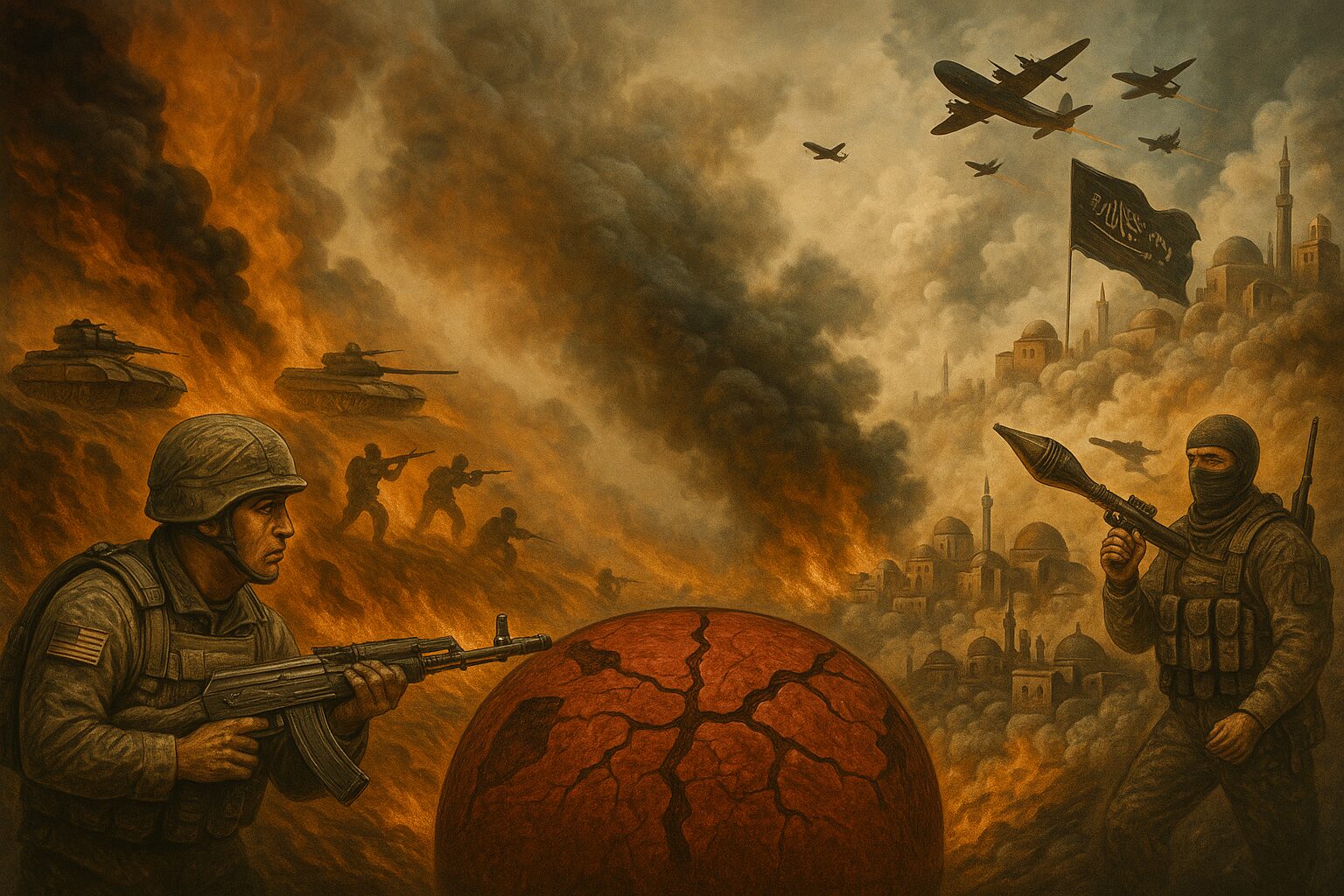
Wars and Rumors of War

Turn on the news any day this week and you’ll see exactly what Jesus meant by “wars and rumors of wars.” Ukraine bleeds as Russia’s invasion drags into its third year. The Middle East teeters on the edge of broader regional conflict as tensions escalate between Israel, Iran, and proxy forces. Venezuela’s political crisis threatens to spill over its borders. Meanwhile, military buildups accelerate across the globe as nations prepare for conflicts that seem increasingly inevitable.
But here’s what’s crucial to understand: Jesus said when we see these things, we should not be alarmed. These are birth pains of the end times, not the end itself. Let’s examine what Scripture actually tells us about recognizing the times while maintaining biblical perspective.
What Jesus Actually Said

📖 Key Biblical Insights
- “See that you are not alarmed”: Fear is not the appropriate response
- “This must take place”: Conflict is part of God’s prophetic timeline
- “The end is not yet”: Wars alone don’t signal the final events
- “Beginning of birth pains”: Intensity will increase over time
The Current Global Landscape
What makes our current moment significant isn’t that there are wars—there have always been wars. It’s the scope, interconnectedness, and potential for escalation that marks our time as unique.
Eastern Europe: The Ukraine Conflict
Russia’s invasion of Ukraine has redrawn European security architecture and strained global alliances. What began as a regional conflict now involves NATO supply lines, threatens global food security, and has pushed nuclear powers closer to direct confrontation than at any time since the Cold War. The ripple effects extend from energy markets to military spending worldwide.
Middle East: Escalating Regional Tensions
The October 7th attacks and Israel’s response in Gaza have inflamed broader Middle Eastern tensions. Iran’s proxy network—from Hezbollah in Lebanon to the Houthis in Yemen—continues escalating attacks. Each strike and counterstrike moves the region closer to the kind of broad conflict that could draw in global powers and reshape the entire region.
Latin America: Venezuela’s Crisis
Venezuela’s disputed election and political turmoil threaten regional stability. Mass migration, economic collapse, and authoritarian crackdowns create conditions that historically lead to broader conflicts. Regional powers are choosing sides, creating potential flashpoints throughout Latin America.
“Nation will rise against nation, and kingdom against kingdom” (Matthew 24:7). We’re witnessing this pattern on multiple continents simultaneously.
The “Rumors of Wars” Element
Jesus specifically mentioned both wars and rumors of wars. In our interconnected world, this takes on new significance. Social media amplifies every threat, military buildup, and diplomatic failure. The psychological impact of constant war reporting creates the very anxiety Jesus warned against.
Current “Rumors”
- China–Taiwan tensions escalating
- NATO–Russia direct confrontation fears
- Iran–Israel broader regional war
- North Korea nuclear provocations
The Fear Factor
- 24/7 news cycle amplifies threats
- Social media spreads unverified reports
- Analysts predict worst-case scenarios
- Public anxiety reaches historic levels
What This Means Prophetically
These conflicts fit the pattern Jesus described, but we need to maintain biblical perspective. The presence of wars and rumors of wars doesn’t mean we’re in the final months or years—it means we’re in the period Jesus called “the beginning of birth pains.” Birth pains increase in intensity and frequency as delivery approaches, but they can last for hours.
⚠️ What We Can and Cannot Conclude
What We Can Say
- Current events match biblical patterns
- We’re in the “birth pains” period
- Intensity appears to be increasing
- Global interconnectedness is unprecedented
What We Cannot Say
- These specific conflicts signal the end
- We can predict timing from current events
- Any particular war is “the big one”
- Fear and panic are appropriate responses
The Appropriate Response
Jesus gave specific instructions for how to respond to these signs. The goal isn’t to predict the exact timing but to live with proper expectation and faithfulness.
Stay Calm
“See that you are not alarmed” isn’t casual advice—it’s a command. God’s people should be the calmest voices in anxious times, not the most fearful.
Stay Alert
“Therefore, keep watch” means staying informed and spiritually prepared, not obsessing over every news cycle.
Stay Faithful
“Who then is the faithful and wise servant?” Focus on faithful service rather than timeline speculation.
Stay Ready
“Therefore you also must be ready” means spiritual preparation, not bunker mentality.
💡 Key Takeaway
Current conflicts confirm we’re living in the “birth pains” period Jesus described, but they should produce watchful readiness, not fearful speculation. We’re called to be the steady presence in an anxious world.
Looking Forward with Hope
Wars and rumors of wars are sobering reminders that we live in a fallen world awaiting redemption. But for believers, they’re also confirmation that God’s plan is unfolding exactly as promised. These conflicts will intensify, but they will also end—not in human victory, but in Christ’s return and the establishment of His eternal kingdom.
Until then, we watch. We pray for peace. We support the suffering. And we remember that our ultimate security isn’t in any earthly kingdom, but in the One who said, “In this world you will have trouble. But take heart! I have overcome the world.”
For more biblical perspective on current events, explore our other articles on PracticallyAdventist.com that examine prophecy through the lens of Scripture and historical context.
Leave a Reply