
Why You Should Pay Attention to the Biblical Sabbath

Ancient Wisdom for Modern Burnout
Why God’s gift of rest deserves serious consideration—regardless of your denomination
The seventh-day Sabbath stands as one of Scripture’s most enduring yet contested principles—a divine institution established at creation, codified at Sinai, and debated throughout Christian history. While Seventh-day Adventists have championed Saturday observance, compelling biblical and historical evidence reveals that honoring the Sabbath principle transcends denominational boundaries. This comprehensive research demonstrates why the biblical Sabbath deserves serious consideration from all Christians, regardless of church affiliation, while modern science validates what Scripture has proclaimed for millennia: humans need regular, structured rest for optimal flourishing.
The Genesis Foundation: God’s Original Design
Key Insight: Universal, Not Tribal
The Sabbath predates Israel, the law, and religious systems—suggesting a principle woven into the fabric of human existence itself. Its foundation emerges not from Mosaic law but from creation itself, establishing its universal relevance. Genesis 2:1–3 presents three divine actions that consecrated the seventh day: God rested from His creative work, blessed the day with special favor, and sanctified it as holy. The Hebrew word Shabbat, meaning “to cease” or “to desist,” emphasizes deliberate cessation from labor rather than mere inactivity. This creation pattern—six days of work followed by one of rest—predates Israel and points to a human-wide rhythm.
“For in six days the LORD made the heavens and the earth… and rested the seventh day.” — Exodus 20:8–11
When God later codified the Sabbath in Exodus 20:8–11, He explicitly referenced creation as its foundation. The commandment’s unique opening word “Remember” implies prior knowledge, reaching back to Eden. This universal scope extended beyond Israel to include servants, foreigners, and even animals within their gates. Exodus 31:12–17 further elevates the Sabbath as a perpetual covenant sign. Isaiah portrays the Sabbath as delight—promising blessing for those who honor it.
Jubilees’ Extreme Position: Why the Early Church Felt Uncomfortable
Historical Context: The pseudepigraphical Book of Jubilees (c. 200–100 BCE) reveals how some Jewish communities developed increasingly rigid Sabbath interpretations that proved incompatible with emerging Christianity. Jubilees 2:17–33 presents the Sabbath as a heavenly institution observed by angels before being given to Israel exclusively: “He did not sanctify all peoples and nations… but Israel alone.”
The Jubilees Death Penalty List
Jubilees 50:12–13 catalogs prohibitions (travel, lighting fire, fighting, etc.) and prescribes death for violations. Early Christians read this as legalism at odds with Jesus’s teaching: “The Sabbath was made for man, not man for the Sabbath.” The result: Jubilees was influential but not canonical.
Why Early Christians Rejected This Approach
The text’s ethnic exclusivism clashed with Isaiah 56:6–7, which welcomes foreigners who keep Sabbath. Its ritual compliance overshadowed the relational and restorative focus of Christ. Its 364-day solar calendar conflicted with mainstream practice in Judaism and the early church.
The 7000-Year Plan: How the Sabbath Ties Into Divine Timeline
Early Church Fathers on the 7000-Year Plan
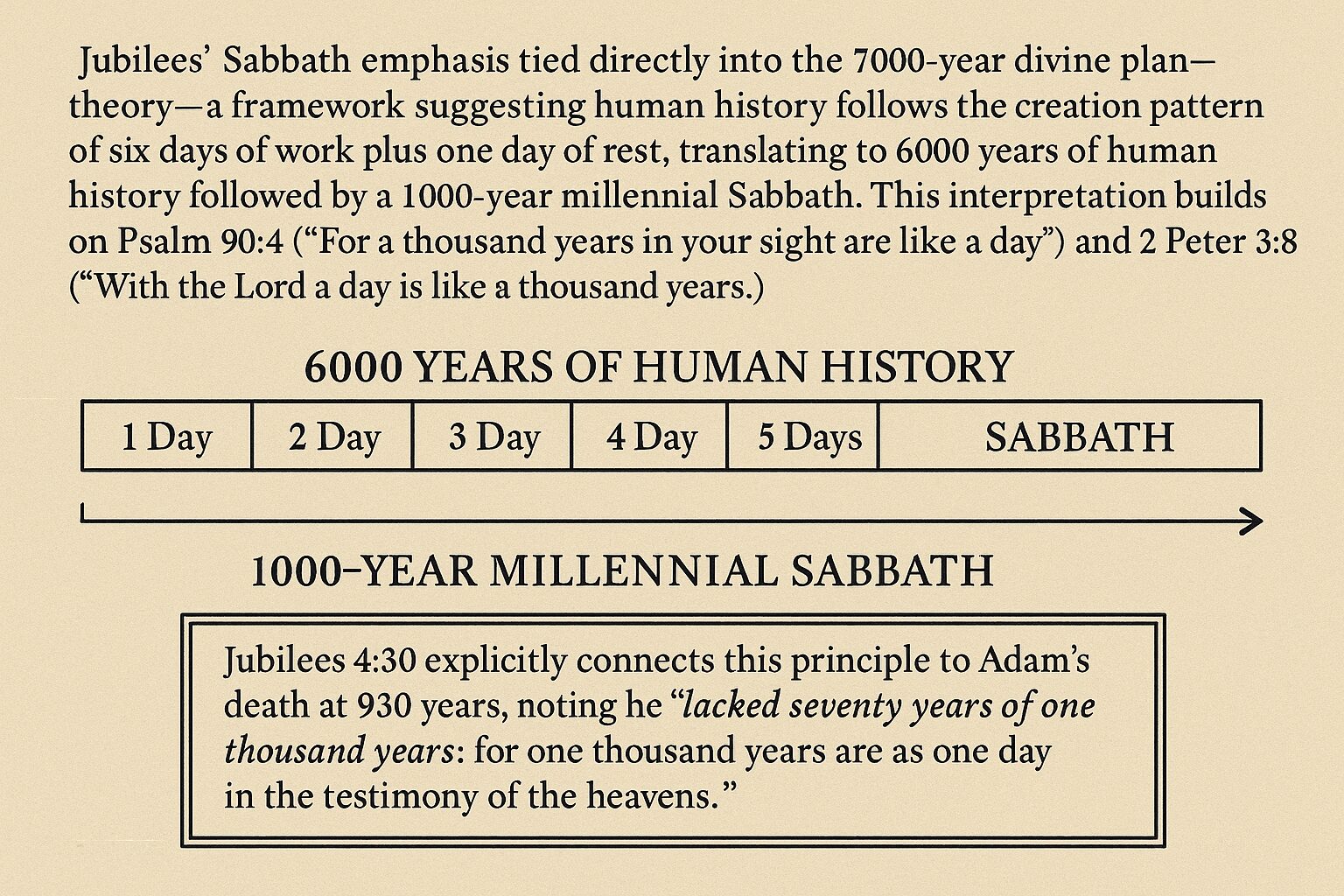
Writers such as the Epistle of Barnabas, Irenaeus, and Hippolytus connected the six days of creation to six thousand years of history with a millennial “Sabbath” to follow (cf. Rev. 20). Whether literal or symbolic, this framework linked weekly rest to cosmic redemption.
Enoch’s Astronomical Precision vs. Jubilees’ Legalistic Severity
Where Jubilees stresses penalties, 1 Enoch (Book of the Luminaries, chs. 72–82) emphasizes calendar precision, proposing a 364-day year so Sabbaths fall consistently. 1 Enoch 74:12 highlights cosmic order rather than policing behavior. These differences—along with tensions with canonical texts—help explain why neither book entered the biblical canon.
Constantine’s Sunday Law: Creating a “Universal” Church
Constantine’s March 7, 321 AD Edict
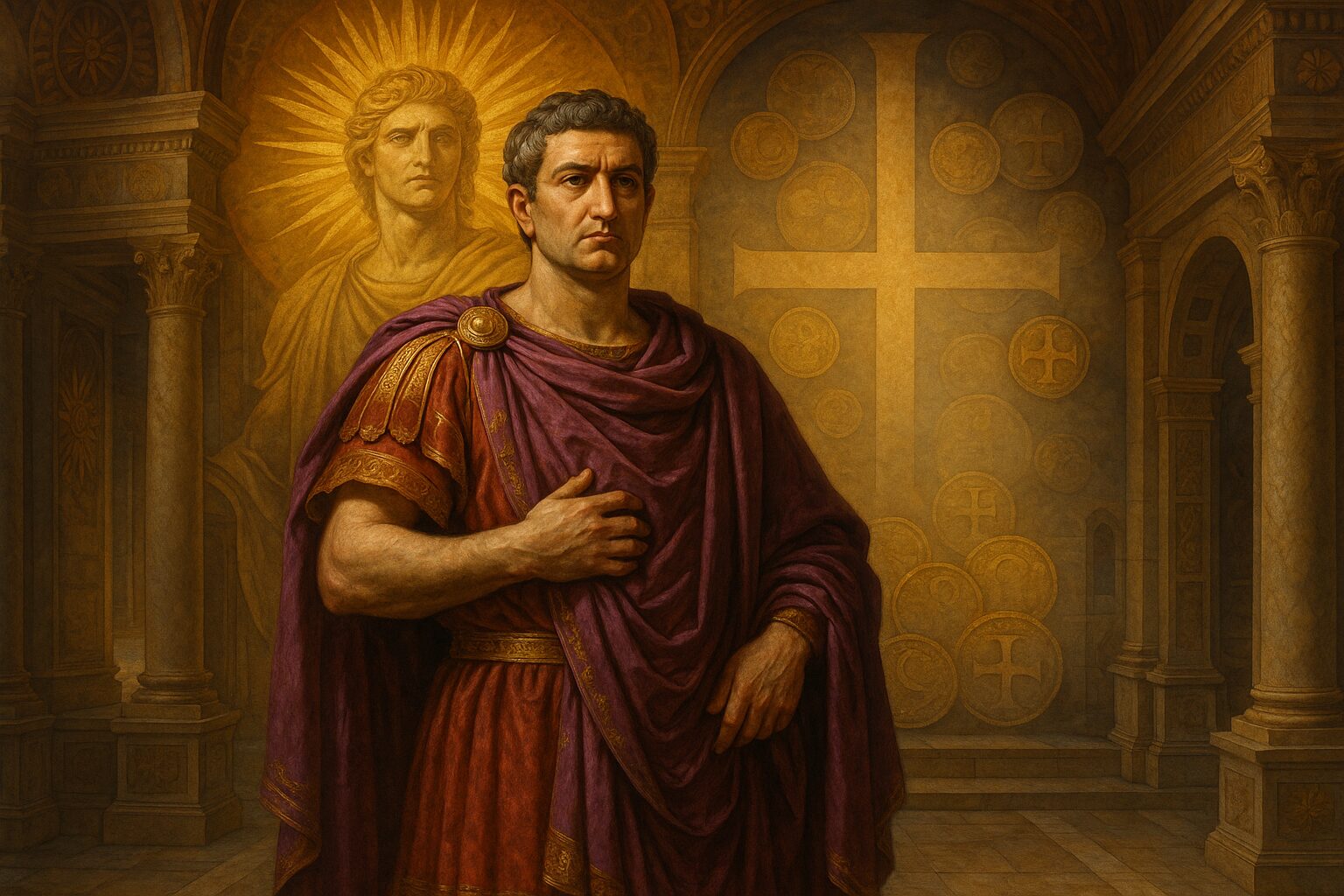
“On the venerable Day of the sun, let the magistrates and people residing in cities rest, and let all workshops be closed.” The wording (venerabili die solis) shows a syncretic approach to unify empire culture, later reinforced ecclesiastically (e.g., Council of Laodicea, Canon 29).
Scripture and Practical Sabbath: What the Bible Actually Says
The Biblical Sabbath in One Sentence
The biblical Sabbath essentially says: don’t work. Jesus adds the purpose: “The Sabbath was made for man” (Mark 2:27). Isaiah 58:13–14 reframes it as a delight. Hebrews 4:9 points to a continuing “Sabbath rest” for God’s people.

Why We Need the Break: Scientific Validation of Divine Wisdom
Modern research aligns with Scripture’s wisdom: weekly rhythms of rest reduce cortisol, improve mental health, support immunity, and strengthen family relationships. Regular tech-free connection and shared meals correlate with better outcomes across the board.
Practical Modern Application: Rest Without Legalism
Making It Work Today
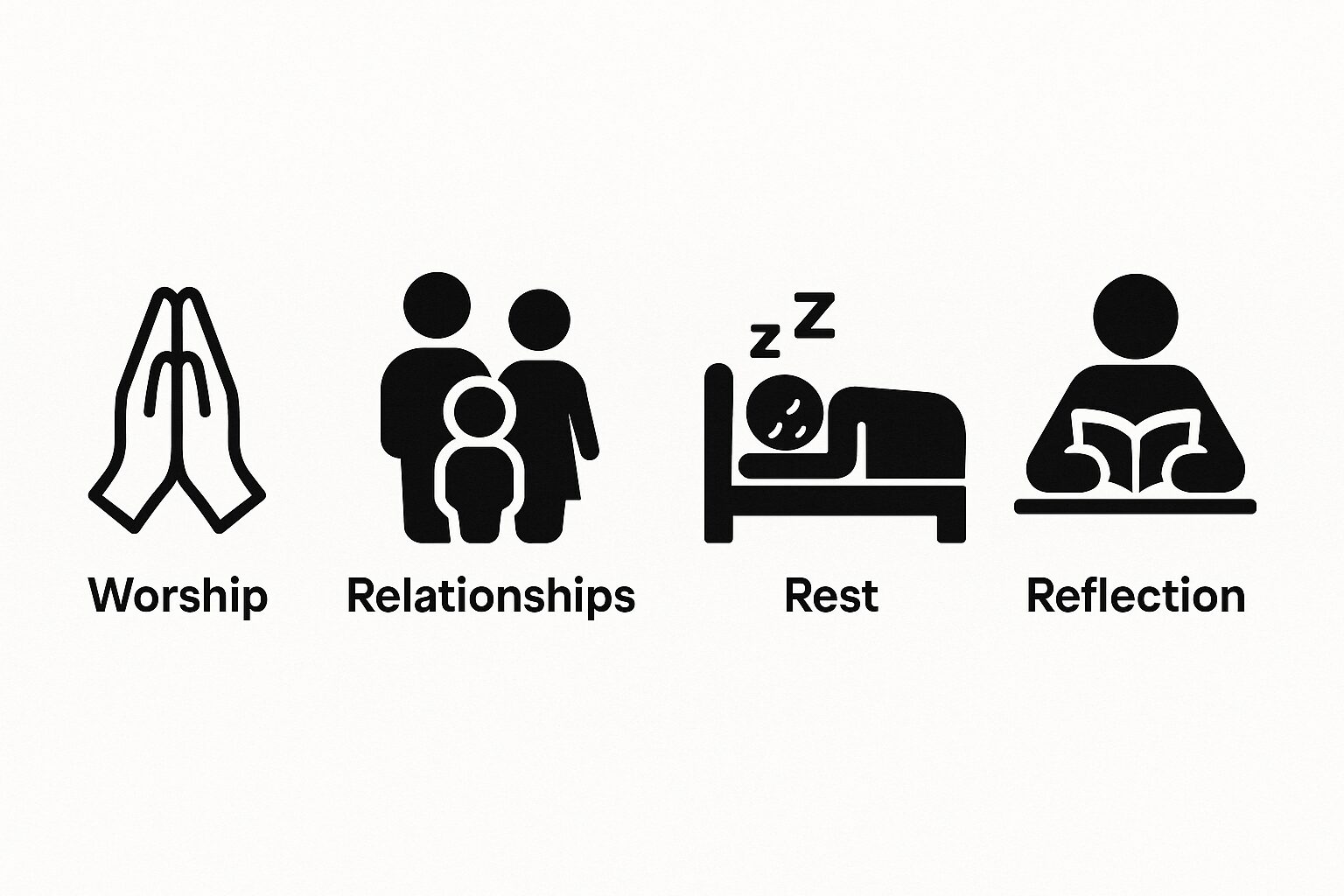
Digital life blurs boundaries; Sabbath helps rebuild them. Whether you keep Saturday or Sunday, aim for intentional cessation from regular work, reconnection with family and God, and acts of mercy.
- Worship: gather with others, family devotions, nature walks, serving
- Relationship building: screen-free meals, storytelling, creative/outdoor time
- Rest: adequate sleep, stress-reducing activities, peaceful home rhythms
- Reflection: gratitude, prayer/meditation, unhurried evaluation
Conclusion: Rediscovering God’s Gift of Rest
The Sabbath is divine wisdom for human flourishing—physically, mentally, relationally, and spiritually. While history shifted many Christians to Sunday, the underlying principle remains a gift, not a burden. Legalism distorts it; Christ restores its purpose.
The Bottom Line
In a hyperconnected, stressed world, the most counter-cultural act may be to stop. Rest. Remember you’re human.
Take the day off. Your soul will thank you for it.

Leave a Reply